Don't Wait for the Last Leaf: Clean Your Gutters Before the Freeze in Connecticut
Published and reviewed by We Gutter LLC, a Connecticut gutter service company.

What is the key takeaway?
Waiting for the last leaf can turn wet gutter debris into a frozen blockage. Learn how ice and snow complicate access, cleanup, drainage checks, and cost—and when to schedule in Connecticut.
Should you wait until every leaf has fallen?
No—not if your gutters are already collecting debris and freezing weather is approaching. For Connecticut homeowners, a better target is to remove the main buildup while the debris is still unfrozen and safe access is available. Waiting for the last leaf can turn an ordinary cleaning into a slower job, a postponed appointment, or a separate ice-related problem.
The goal is not a perfectly leaf-free roof for the rest of winter. It is a working drainage path before rain, freezing temperatures, and snow make that maintenance harder.
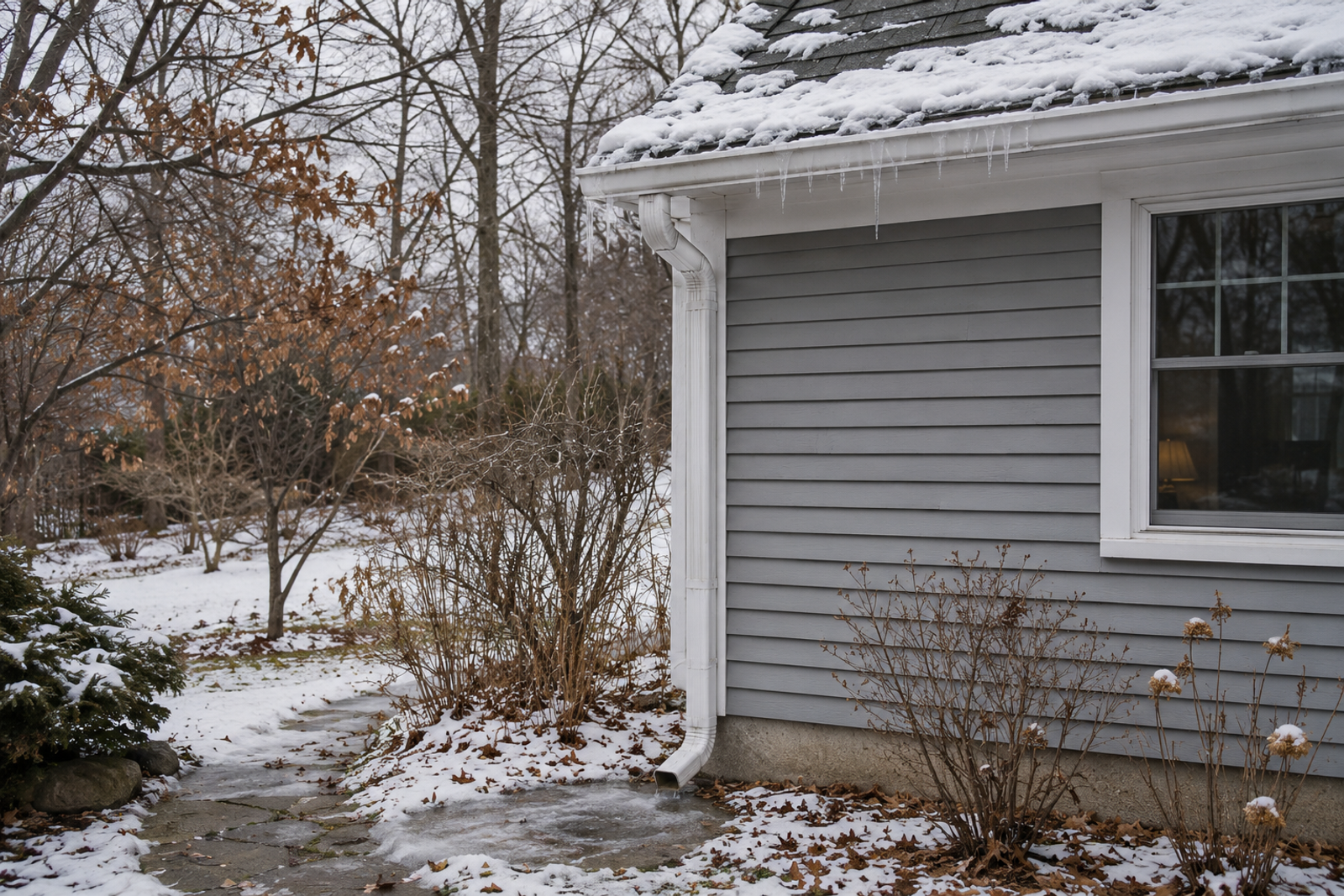
Images in this article are AI-generated illustrations of representative conditions, not photographs of We Gutter customer projects.
What happens when rain-soaked leaves freeze inside gutters?
Leaves and small twigs can restrict the gutter channel or the opening into a downspout. Rain wets and compacts that debris; where drainage is obstructed, water can remain behind. If the water and surrounding surfaces stay cold enough, that mixture can freeze together.
At that point, the problem is no longer just loose leaves. A scoop or blower that might remove unfrozen debris cannot simply clear leaves bonded into ice. Trying to force the material out can damage the gutter or its connections. A contractor may need to wait for a thaw or recommend an appropriate specialist rather than continue a routine cleaning.
A forecast near or below 32°F (0°C) deserves attention, but it is not a universal work cutoff. Overnight conditions, shade, roof temperature, wind, and the amount of ice matter. A sunny afternoon above freezing does not prove a shaded gutter or ladder setup area is safe.
View the enlarged illustration of snow and icy access beside a downspout
AI-generated illustration: snow and ice can complicate access around a home. This is not a We Gutter project photograph.
Why cleaning after snow or a hard freeze becomes more difficult
1. Access can become the limiting factor
Snow and ice can affect walkways, ladder footing, roof edges, and the work area below. Snow may also conceal hazards. OSHA's winter-weather guidance emphasizes evaluating these conditions and selecting suitable equipment and fall protection.
That means a professional assessment may end with a postponement. Paying more does not make an unsafe roof or icy ladder position acceptable. Homeowners should not climb onto a snowy or icy roof to finish the job themselves.
2. Frozen material takes different handling
A mat of wet leaves is different from a frozen mass attached to the gutter. Removal may take longer once conditions permit it, and some sections may not be accessible during the same visit. Routine gutter cleaning should not be assumed to include ice-dam removal or roof snow removal.
For a comparison of ordinary cleaning methods, see hand cleaning versus leaf-blower gutter cleaning. Neither method is a shortcut for removing solid ice safely.
3. Drainage checks may be limited
Ice in a gutter, outlet, downspout, or discharge area can keep water from moving normally. Introducing water for a flow test may be inappropriate if it could refreeze. Ask what can actually be checked during that visit and what needs to be revisited after thawing.
An empty-looking gutter alone does not establish that the entire drainage path is clear. Our guide to a clogged downspout versus a blocked underground drain explains why the location of a blockage matters.
Can waiting make gutter cleaning more expensive?
It can, but there is no single price increase that applies to every property or contractor. The practical cost drivers are additional labor, more complicated access, equipment requirements, the amount and condition of debris, and whether another visit or a separate service is necessary.
A straightforward unfrozen cleanup and a job involving snow-covered access or frozen debris are not necessarily the same scope. This is a job-planning consideration—not a claim that every contractor charges more or that a particular increase applies to your home.
Before accepting an estimate, ask:
- Does the price cover routine debris removal only, or any ice-related work?
- Are downspouts and accessible discharge points included?
- What happens if conditions make part of the job unsafe or impossible?
- Would a return visit or additional equipment require a separate quote?
- What cleanup and debris disposal are included?
Compare the agreed work, not just the lowest number. Never accept an unsafe method simply to avoid rescheduling.
Frozen gutters and roof ice dams are not the same problem
A frozen blockage inside a gutter is not automatically a roof ice dam. The University of Minnesota Extension explains that ice dams involve snow melting on warmer roof areas and refreezing at colder edges; heat escaping from the home can contribute. Water can then back up behind the ice.
Cleaning gutters helps remove drainage obstructions, but clean gutters do not guarantee an ice-dam-free roof. Recurring ice dams or interior leaks call for evaluation of the roof and heat-loss conditions, including insulation and air sealing, by appropriate professionals.
The National Weather Service recommends clearing leaves and debris from gutters and downspouts so melting snow has a drainage path. Treat that as part of winter maintenance, not a substitute for addressing the cause of recurring ice dams.
A better fall plan for Connecticut homeowners
Plan around debris buildup and the forecast, not the last leaf on the last tree. There is no single cleaning date that fits every property in Waterbury, Hartford, New Haven, or the rest of Connecticut. Tree cover, recent storms, shade, drainage history, and actual site conditions should guide the decision.
- Arrange the main cleaning after substantial leaf fall while conditions remain suitable.
- Do not delay if you already see overflow, heavy debris, or water failing to drain.
- Check the local forecast for rain followed by freezing nights or snow; leave room for weather-related rescheduling.
- If late leaf fall creates another substantial buildup, discuss a follow-up check rather than leaving the first buildup in place indefinitely.
- Coordinate gutter cleaning before the final yard leaf cleanup when practical. Agree in advance on roof debris handling, ground cleanup, and disposal with both contractors.
A few remaining leaves in nearby trees are not a good reason to leave an already-obstructed gutter through a freeze.
What if your gutters are already frozen?
Keep people away from falling ice and slippery areas below the roof edge. Contact a professional and describe what you can observe safely from the ground: visible ice, overflowing water, a blocked outlet, or any interior leak.
Do not hammer or pry ice out, use an open flame, or pour boiling water into the gutter as a DIY shortcut. Avoid climbing onto snowy or icy surfaces. A routine cleaning provider may recommend waiting for safe thawing conditions or referring an ice-related problem to a specialist. An active interior leak warrants prompt professional assessment, not waiting for the next routine cleaning.
Frequently asked questions
Is it too late to clean gutters after the first frost?
Not necessarily. A brief frost does not mean the gutters are frozen solid. The decision depends on actual debris, ice, access, and weather conditions—not the calendar alone.
Should I wait for all the leaves to fall to avoid paying twice?
Not when existing debris is obstructing drainage or freezing weather is approaching. Removing the main buildup and checking later can be more practical than letting it freeze in place. Whether a second visit is needed depends on the property.
Can a leaf blower clean frozen gutters?
A blower can move suitable loose debris, but it cannot be relied on to remove leaves bonded into solid ice. The contractor should choose the method based on conditions and avoid forcing frozen material loose.
Does gutter cleaning prevent all ice dams?
No. Cleaning supports drainage; ice dams can still form because of roof temperature differences and heat loss from the home. Recurring problems need a broader assessment.
Can you guarantee cleaning during freezing weather?
No responsible appointment should promise work regardless of conditions. Availability and the safe scope of work must be confirmed for the property and the day.
Schedule before weather limits your options
If your gutters are filling up, do not wait for every tree to be bare before asking about service. Request a free gutter-cleaning estimate from We Gutter or call (860) 999-8766. Tell us your Connecticut town, the home's height, any gutter guards, and whether you can see ice or overflow from the ground.
Learn more about our Connecticut gutter-cleaning service. Scheduling, pricing, and the safe scope of work are confirmed directly after reviewing the property and conditions. A free estimate is not a promise that frozen gutters can be serviced immediately.
Sources
- OSHA: Winter Weather — Hazards and Precautions
- University of Minnesota Extension: Dealing with and Preventing Ice Dams
- National Weather Service: Preventing Roof Ice Dams
Reviewed November 26, 2026. This article provides general maintenance guidance; conditions at your property determine what work can be performed safely. General cost considerations are not a fixed quote or a published winter surcharge. Safety sources are provided for education and do not imply endorsement of We Gutter.